Emergency Lighting Test Failed? Repairs, Retesting and Next Steps
24/7
REACTIVE CALL-OUTS
100%
INCOMING CALLS ANSWERED
70+ YEARS
COMBINED TEAM EXPERIENCE
A failed emergency lighting test does not necessarily mean an entire commercial building must close. Whether affected areas can remain in use depends on the location and extent of the fault, available emergency lighting and any suitable temporary safety arrangements. This guide explains how to assess failed emergency lights, decide between repairs and replacement, arrange appropriate retesting and maintain records showing what has been resolved before the next inspection.
Failed Emergency Lighting Tests in Commercial Buildings
Find Out Which Faults Need Attention, What Repairs May Be Required and How to Prepare for Your Next Inspection
Your latest emergency lighting test report has identified a failure.
It might be a single fitting that didn't illuminate, a battery that couldn't maintain the required duration, or several lights that failed in the same area.
You're now dealing with getting the fault assessed, arranging the necessary work and making sure there's a record of how it was resolved.
Before that can happen, you need to establish which areas are affected and whether any temporary precautions are required.
Can the affected area remain in use while repairs are arranged?
Does the contractor need to investigate the wider system, or can the problem be resolved by replacing a component?
And what documentation will demonstrate the issue has been addressed when your next inspection comes around?
The type of failure, its location and the condition of the equipment will influence what happens next.
They can also make a significant difference to the work you need to approve.
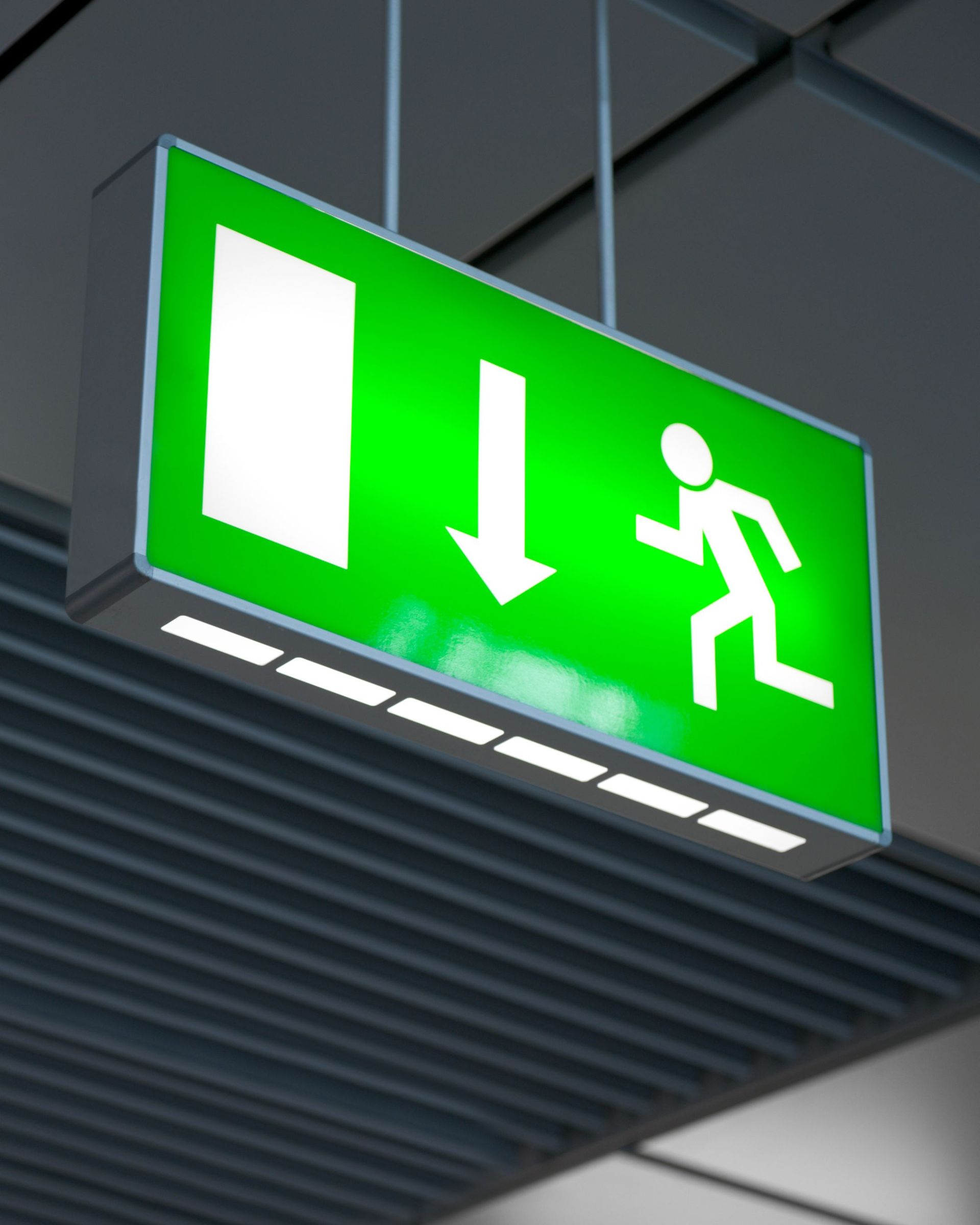

What to Do After a Failed Emergency Lighting Test
Establish Which Escape Routes Are Affected and What Precautions Are Needed While Repairs Are Arranged
Before arranging repairs, review the test report to identify which fittings failed, their locations and any recommendations already made.
If the report simply states "failed" without explaining the findings, ask the testing contractor for more detail.
Pay particular attention to escape routes, staircases and exits.
A failure affecting these locations may require more urgent action than an isolated fault where adequate emergency lighting remains available.
If the failed lighting affects an escape route or another important area, make sure the risk is assessed promptly.
The person responsible for fire safety will need to establish whether temporary precautions are necessary while repairs are arranged.
Depending on the findings, temporary lighting, changes to escape arrangements or restricted access may be necessary.
Establishing this early also helps you plan repairs around building use without compromising safe evacuation.
If adequate protection cannot be maintained, normal use of the affected area should not continue without appropriate safety arrangements.

Common Emergency Lighting Test Failures
Recognise the Difference Between Fitting, Battery and Wider Electrical Faults Before Approving Repairs
| What you're seeing on site | What this could mean | What needs to happen next | How JDP helps |
|---|---|---|---|
| An emergency light doesn't come on during testing. | A battery, charging, fitting or supply fault may be preventing it from operating. | Establish whether the failure is isolated, check the affected escape route and investigate the fault. | Keep the work together: Our electrical testing and repair services can help you arrange fault investigation, remedial work and the checks needed afterwards. |
| The lights come on, but some go out before the test finishes. | The equipment may be unable to maintain illumination for its required duration. | Investigate the battery and charging system, then establish whether repair or replacement is appropriate. | Get the affected equipment repaired and appropriately retested, with follow-up checks to establish whether the original fault has been resolved. |
| Several emergency lights have failed in the same area. | A shared electrical supply or control problem may be affecting multiple fittings. | Investigate whether the failures have a common cause before approving individual replacements. | Investigate a possible shared fault: Establish whether the fittings themselves need replacing or whether the problem lies elsewhere in the installation. |
| The lights work, but part of an escape route is poorly illuminated. | Obstructions, changes to the layout or unsuitable positioning may be affecting coverage. | Review whether the existing installation still provides suitable emergency illumination. | Review what needs changing to suit the building's current layout, rather than replacing fittings in the same positions without addressing the problem. |
| Repairs have been completed, but the failed test is still outstanding on your records. | Follow-up testing or documentation may be incomplete. | Confirm what work was completed, whether the original fault was retested and what evidence is available. | Check what's still outstanding: Our testing services can help establish whether further checks are needed before the defect can be closed out. |
Before approving replacement fittings, ask the contractor to confirm what's causing the failure.
If several lights have failed because of a shared electrical fault, replacing each fitting may not address the problem.
Emergency Lighting Repairs or Replacement?
Compare Individual Repairs With Planned Replacement So You Can Assess the Cost, Access Requirements and Disruption
A failed emergency light doesn't always need replacing in full.
If the problem is a deteriorated battery and a compatible replacement is available, replacing that component may restore reliable operation.
However, repairs become less practical when fittings are damaged, parts are unavailable or the same equipment continues developing faults.
Before approving the work, ask whether the proposed repair will restore the required performance and whether the existing fitting remains suitable for its location.
If several older fittings are failing, it may be worth discussing planned replacement and electrical maintenance rather than approving each repair separately.
This allows you to compare the overall cost, access requirements and disruption before committing to the work.
Any replacement equipment must be suitable for the building's emergency lighting requirements. Matching the appearance of an existing fitting isn't enough.


Emergency Lighting Retesting and Compliance Records
Confirm the Failed Equipment Has Been Checked Again and Keep a Record of the Work Completed and Any Outstanding Faults
Once repairs are complete, the affected lighting needs testing again to confirm the original problem has been addressed.
For example, if a fitting failed because it couldn't maintain illumination for its required duration, a brief functional test alone won't demonstrate that the original fault has been resolved.
The testing required will depend on the fault and the work carried out.
Full-duration testing also needs careful scheduling. Batteries can take around 24 hours to recharge after being discharged, meaning the system may not provide its full rated duration during that period.
Full-duration tests should be planned so the building isn't left without adequate emergency lighting while batteries recharge.
Where the system cannot provide the required protection, suitable alternative arrangements must be established before affected areas are occupied.
Your emergency lighting maintenance records should show:
- Original failure: What failed, where and during which test.
- Remedial work: What was repaired or replaced.
- Retesting: The subsequent results and whether the affected equipment passed.
- Outstanding actions: Any defects or recommendations still awaiting completion.
Keep these details with your emergency lighting logbook or maintenance records.
When your next inspection comes around, you should have a clear record of the original failure, the work completed and the results of any follow-up testing. If anything remains outstanding, that should be recorded too.


Commercial Emergency Lighting Testing and Repairs in Central England
Get NICEIC Accredited Electrical Support Backed by Over 70 Years of Combined Fire, Security and Electrical Experience
When you're managing a building, the last thing you need is a failed test that turns into several separate jobs with different contractors.
Our electrical team can help you investigate the fault, arrange suitable repairs and establish what testing is needed afterwards.
We support businesses across Central England with emergency lighting testing, electrical repairs and ongoing maintenance.
- One contractor from fault investigation to retesting: Get outstanding faults addressed without having to coordinate different contractors for each stage.
- NICEIC accredited electrical services: Work with a contractor whose electrical installation, inspection and repair services are backed by recognised industry accreditation.
- Planned preventative maintenance: Keep routine testing organised and identify developing faults before they become repeated problems.
- Support outside normal working hours: Contracted customers can access our 24/7 reactive call-out service when electrical faults need attention outside the usual working day.
With over 70 years of combined experience across fire, security and electrical services, our team understands how these systems fit into the wider responsibilities of managing commercial premises.
That experience helps us look beyond an individual fault and consider the practical requirements of keeping your building maintained, safe and ready for its next inspection.

Areas We Provide Fire, Security and Electrical Maintenance
JDP delivers local contracts in the Midlands and South West, including:

Failed Emergency Lighting Test FAQs
Get Answers on Repair Costs, Landlord Responsibilities, Building Disruption, Retesting and Choosing a Contractor
Emergency Lighting Fault Assessment
Discuss Your Failed Test Report, Establish What Work May Be Needed and Get the Next Steps Moving
If your latest test has identified faults, we can help you establish what needs repairing, whether replacement is appropriate and what follow-up testing may be required.
Get a Free Assessment with JDP to discuss the findings and the work needed at your premises.
If you already have a test report, have it available when you contact us. It will help us understand what's been identified and discuss the next steps.
Get the outstanding work moving and make sure the next steps are properly accounted for.
Book a Free CCTV Assessment Today